[Skip to Content]
Overbrook School for the Blind Home
  • Accessibility Options
  • Get Involved
  • Careers
  • Make a gift
  • Who We Are
    • About Us
    • Our Stories
    • Meet Our Executive Director & CEO
    • Leadership
    • Board of Trustees
    • Our Students
    • Our Staff
    • Certification & Partnerships
    • Green Initiatives
    • History and Architecture
    • Map and Directions
    • Contact Us
  • What We Do
    • CVI
    • Early Intervention Services (Birth to 5)
    • School Age Programs (K-21)
    • Itinerant Services
    • Support & Related Services
    • Student Life & Activities
    • Short Term Programs
    • International Program
    • Low Vision Clinic
  • Why Overbrook
    • Admissions Process
    • Admissions
    • Who We Enroll
    • Enrollment FAQS
    • Expanded Core and National Agenda
  • Parents
    • School Calendar
    • Parent Update
    • Health Services
    • Lunch Menu
    • Inclement Weather
    • Diet and Nutrition
    • Student Policies
    • Resources
    • PERC
  • Support Us
    • Taking Flight Campaign
    • Make A Gift
    • Ways To Give
    • Annual Fund
    • Tax Credit Giving
    • 1832 Society
    • Annual Report
    • Events
    • Planned Giving
    • Development Team
  • Home
  • Who We Are
    • About Us
    • Our Stories
    • Meet Our Executive Director & CEO
    • Leadership
    • Board of Trustees
    • Our Students
    • Our Staff
    • Certification & Partnerships
    • Green Initiatives
    • History and Architecture
    • Map and Directions
    • Contact Us
  • What We Do
    • CVI
      • CHOP Announcement
      • History of CVI at OSB
    • Early Intervention Services (Birth to 5)
      • Early Intervention (Birth to 3)
      • Early Intervention Campus-based (3 to 5)
      • Early Intervention Community-based (3 to 5)
    • School Age Programs (K-21)
      • Primary
      • Secondary
      • STRIDE
      • Transition Services
    • Itinerant Services
    • Support & Related Services
      • Audiology
      • Orientation and Mobility
      • Occupational Therapy
      • Physical Therapy
      • Speech Therapy
    • Student Life & Activities
      • Athletics
      • The Arts
      • The Kappen Aquatic Center
      • Farm to Table
      • M. Christine Murphy Horticulture Education
    • Short Term Programs
      • Extended School Year
      • Overbrook TVI Program (Summer)
      • (STRIDE)
      • White Hall Apartment Living Program
    • International Program
    • Low Vision Clinic
  • Why Overbrook
    • Admissions Process
    • Admissions
    • Who We Enroll
    • Enrollment FAQS
    • Expanded Core and National Agenda
  • Parents
    • School Calendar
    • Parent Update
    • Health Services
    • Lunch Menu
    • Inclement Weather
    • Diet and Nutrition
    • Student Policies
    • Resources
      • Diversity, Equity & Inclusion
    • PERC
  • Support Us
    • Taking Flight Campaign
    • Make A Gift
    • Ways To Give
    • Annual Fund
    • Tax Credit Giving
    • 1832 Society
    • Annual Report
    • Events
    • Planned Giving
    • Development Team

Why Overbrook

Why Overbrook

    • Admissions Process
    • Admissions
    • Who We Enroll
    • Enrollment FAQS
    • Expanded Core and National Agenda
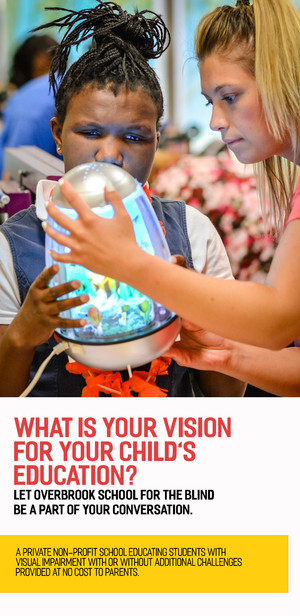
photo of student and teacher looking at small light up aquarium

Why Choose OSB?

  • A full staff of Certified Teachers of the Visually Impaired
  • Orientation and Mobility assessment, instruction, and support 
  • Consistency in service provision for students K-21
  • Knowledge and support of available assistive technology
  • Excellent coordination with schools, service coordinators, and teachers
  • Outreach to parents and families of students
  • Links to outside resources for families and staff
  • The leader in the implementation of the Expanded Core Curriculum
  • Overbrook School for the Blind has 187 years of experience of providing education to students who are blind and visually impaired

Lastest News

This is a carousel with manually activated slides. Use slide dots to jump to any of the slides.

    • Using Braille, Students Write Themselves Into Steinbeck’s World

      Tyzier and Layan are using braillers to write their essays
      In a classroom punctuated by the steady rhythm of braillers, secondary students in Eva P.’s


      In a classroom punctuated by the steady rhythm of braillers, secondary students in Eva P.’s class stepped into the world of Of Mice and Men—not as readers alone, but as voices living inside John Steinbeck’s characters.


      The lesson, titled “Voices from the Ranch,” invited students to choose from a set of character-based prompts designed to deepen analysis and sharpen written expression. Using braillers, students wrote first-person essays from the perspectives of figures they had met in Chapter 2 of the novel, examining motivation, power dynamics, and relationships that define life on the ranch.


      Some imagined Curley’s guarded first impressions. Others explored a private exchange between George and Lennie, revealing loyalty and tension beneath their bond. Slim’s quiet authority and Candy’s fear of aging and usefulness also emerged as focal points. Across all responses, students were asked to stay true to each character’s voice while grounding their ideas in specific textual details—a balance of creativity and close reading.


      Essays ranged from one to two pages in braille and were written independently, reinforcing essential literacy skills alongside literary analysis. The tactile, hands-on nature of the brailler supported focus and ownership of the work. As keys pressed and lines formed, comprehension was translated into thoughtful, analytical writing.


      "Students enjoy the opportunity to be creative while demonstrating their understanding of the text, making this type of activity a true win-win for us," Eva P. said. "By getting into the mind of a character, they move beyond simply identifying what happens in the story to analyzing why it happens. They must return to the text for evidence to support their interpretations of a character’s thoughts and feelings. Many shared that their favorite part was presenting their pieces to peers and the thoughtful conversations that followed."


      The approach also underscored accessibility without sacrificing rigor. By pairing a classic novel with an inclusive writing task, the lesson demonstrated what visually impaired students can accomplish when given the right tools and clear expectations. The brailler became both a means of access and an instrument of independence.


      More than an exercise in creative writing, “Voices from the Ranch” offered students a way to inhabit complex characters and confront enduring themes—power, vulnerability, and belonging—on their own terms. In doing so, the class showed that deep engagement with literature isn’t limited by format, but expanded by thoughtful design.


    • Serving Independence: Snack Bar Empowers Students with Real-World Skills

      Conner uses his AMD (Adaptive Mobility Device) to deliver phoned-in orders of snacks to classrooms around campus
      For Secondary and STRIDE students like Conner H., the OSB snack bar serves as a hands-on training

      For Secondary and STRIDE students like Conner H., the OSB snack bar serves as a hands-on training ground where classroom lessons meet real responsibility.

      A high school student, Conner counts money, calculates totals, and makes changes while practicing the social skills that come with serving customers. Students answer phones, manage email orders using assistive technology, and complete deliveries that strengthen orientation and mobility skills. Every shift reinforces communication, problem-solving, and the confidence that comes from doing the job yourself.

      The program has expanded steadily, with cooking tasks like preparing bagels and toast returning after a pandemic pause. Students operate the toaster and coffee maker, serve hot and iced coffee, and help keep the five-day-a-week operation moving. 

      Fridays bring the heaviest traffic, but the focus remains the same: Building independence through real work experience. Staffed by multiple classes, the snack bar touches nearly every area of instruction — vocational, social, academic, and travel skills — preparing students for greater autonomy beyond school.


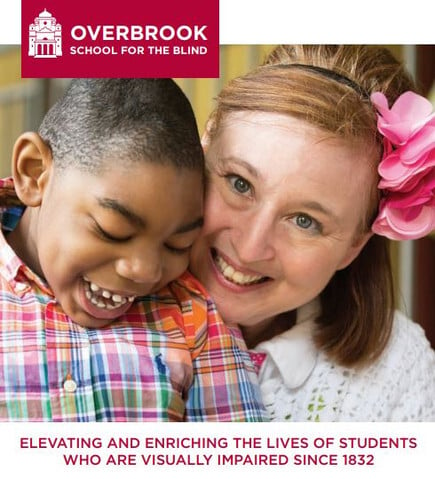
general brochure cover

Overbrook School for the Blind General Brochure


Overbrook School for the Blind
  • LinkedIn
  • Instagram
  • Facebook

Contact Information

  • 6333 Malvern Avenue
    Philadelphia, PA 19151
  • (215) 877-0313
  • Email Us
  • Contact Us
Charity Navigator badge for 4 Stars in 2025
Overbrook School for the Blind earned the highest rating from Charity Navigator, the nation's largest charity evaluator.

Links

Donate
© 2026 Overbrook School for the Blind. All Rights Reserved.
Created with CMS4Schools
Get Involved